
Early Detection Saves Lives
Skin Cancer Detection
& Treatment
Regular skin checks, careful dermatoscope exams, biopsies when needed, and early treatment for suspicious or pre-cancerous lesions.
Schedule a Skin CheckWhen to See a Dermatology Provider
If you notice a new spot, a mole that has changed, or anything on your skin that concerns you, do not wait. Early detection dramatically improves outcomes, and we offer immediate scheduling for new patients.
Our Capabilities
What We Offer
Full-Body Skin Checks
A thorough examination of your skin using a dermatoscope so suspicious lesions can be evaluated with more precision than the naked eye allows.
Skin Biopsies
If a spot needs a closer answer, biopsies are performed thoughtfully and explained clearly so you understand what happens next.
Photodynamic Therapy
Blue light treatment can be used for actinic keratoses and select superficial skin-cancer concerns without a more invasive procedure.
Actinic Keratosis Treatment
Pre-cancerous rough, scaly lesions can be treated before they have a chance to develop into squamous cell carcinoma.
Our Tools
The Dermatoscope
Diana uses a dermatoscope, an illuminated magnification device that allows for detailed examination of suspicious skin lesions. It reveals structures beneath the skin surface that are invisible to the naked eye and improves the accuracy of early detection.
This is part of a practical, prevention-first approach that also includes sun protection guidance and up-to-date educational resources patients can actually use.
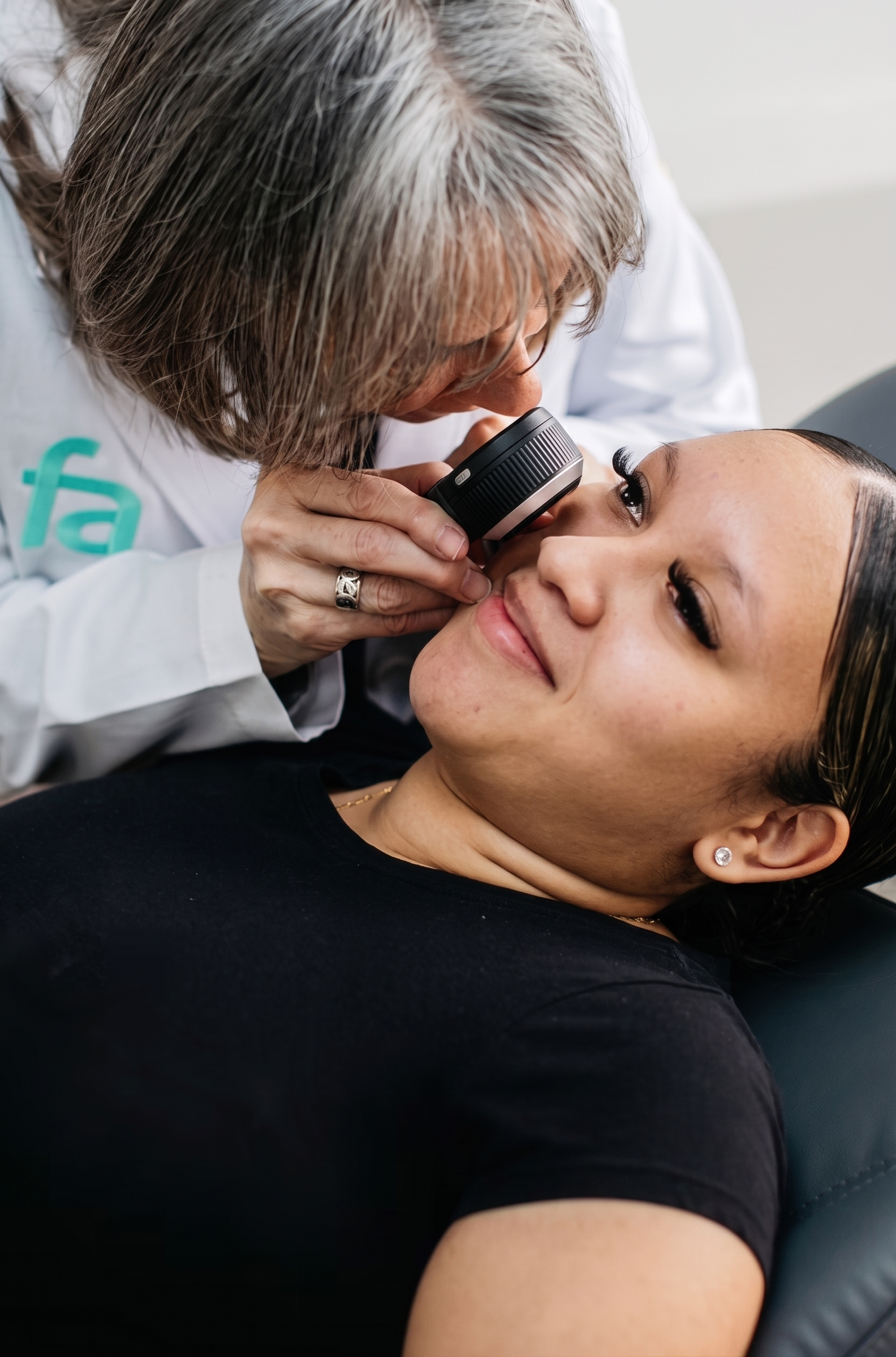
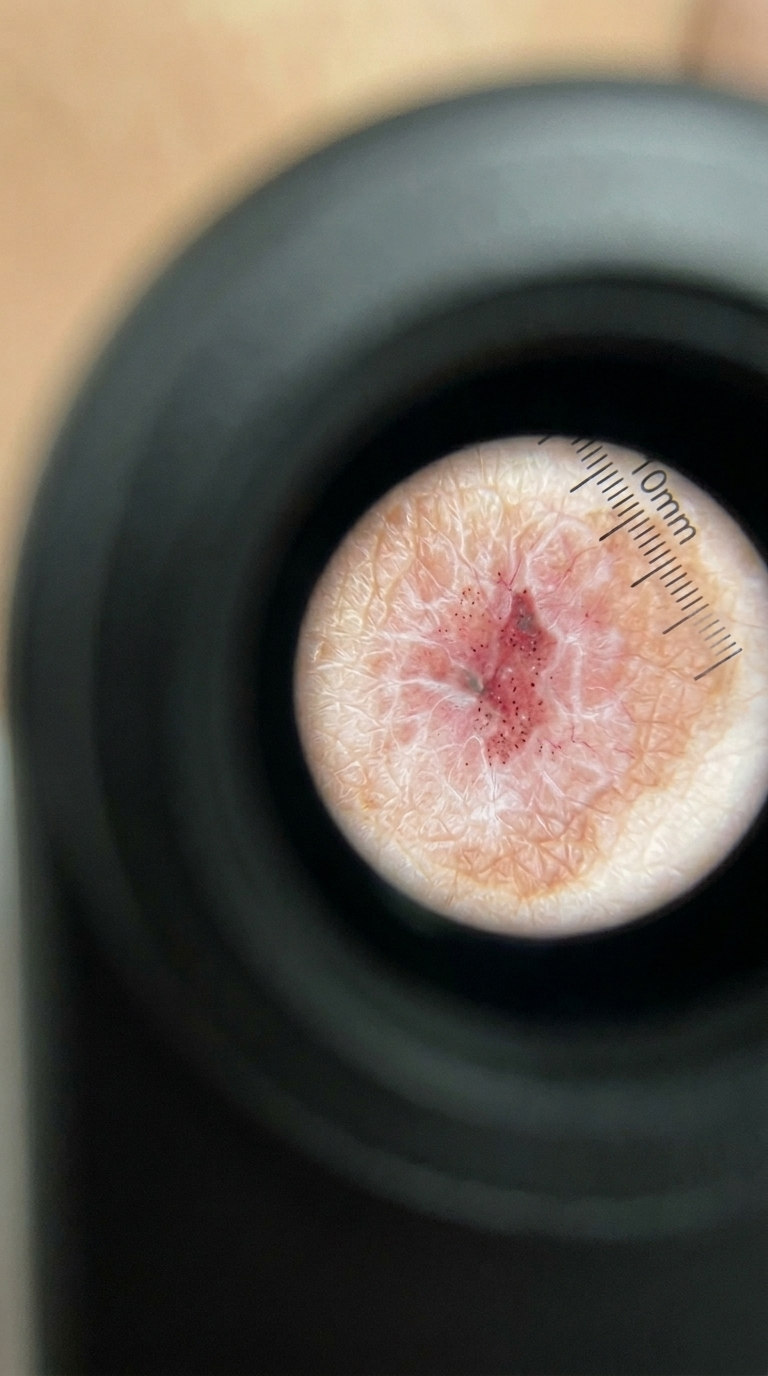
Diana uses dermatoscopy as part of a prevention-first approach, pairing close visual examination with practical guidance and next-step planning.
What Your Visit Can Include
Prevention Guidance and Personalized Treatment Planning
Skin-cancer care at Fairfax is not only about identifying a concerning spot. Visits also include practical prevention guidance and treatment planning based on what Diana sees during your exam.
Individualized Prevention Strategies
Practical Prevention
- No tanning bed use
- Badger mineral sunscreen recommendations
- Sun-protective clothing
- Vitamin B3 support when appropriate
- Vitamin D3 guidance when needed
- Topical chemotherapy creams for select cases
Personalized Treatment Plans
Next-Step Care
- Biopsy of suspicious lesions
- Blue light treatment for appropriate pre-cancerous concerns
- Liquid nitrogen for targeted lesion treatment
- Topical retinoids when clinically appropriate
- Topical chemotherapy when indicated
- Referral to a MOHS surgeon when skin cancers require it
Visual Examples
Dermatoscopy During a Skin Check
This video gives patients a closer look at how a dermatoscope is used during a skin check appointment. Diana uses the tool to examine spots in more detail, explain what she is seeing, and decide whether monitoring, biopsy, treatment, or referral is the right next step.
fairfaxacne A closer look at a skin examination with a dermatoscope
View this post on InstagramKnow the Signs
The ABCDEs of Melanoma
Use this guide to monitor your skin between appointments. If you notice any of these warning signs, contact us promptly.
Asymmetry
One half doesn't match the other
Border
Edges are irregular, ragged, or blurred
Color
Varies from one area to another, with shades of brown, black, red, white, or blue
Diameter
Larger than 6mm (about the size of a pencil eraser)
Evolving
Any change in size, shape, color, or any new symptom
Don't Wait on a Suspicious Spot
If something on your skin concerns you, let's take a look now. Early attention matters.
Request a Skin Check